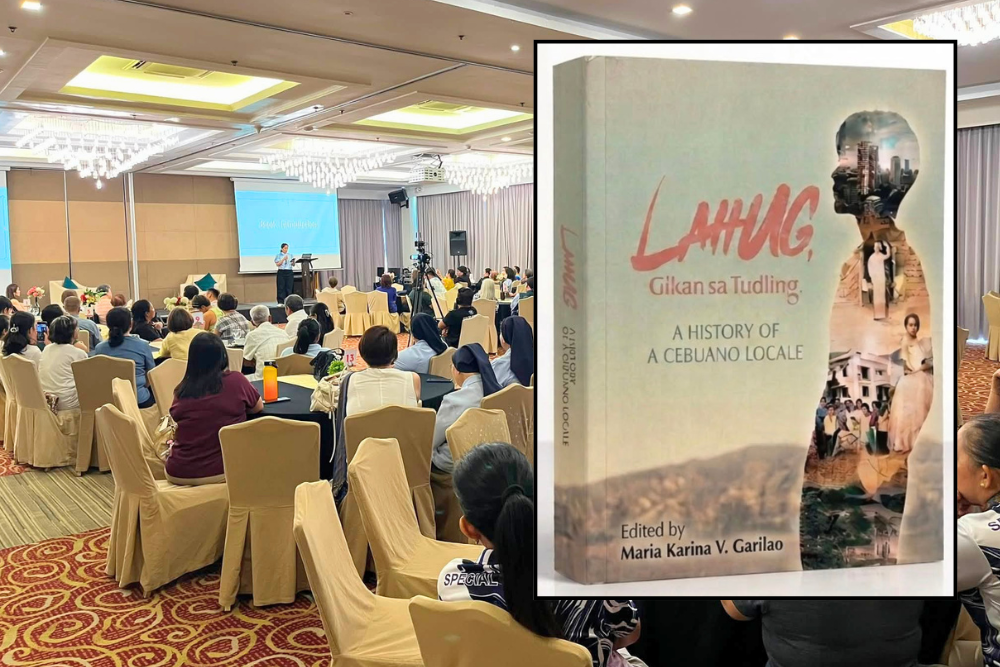
Finally, Lahug, Gikan sa Tudling: A History of a Cebuano Locale has been launched. The event took place on 20 August at Harold’s Hotel in Barangay Lahug, Cebu City.
This marks my sixth published book where I did the photography. Each book has given me another opportunity to document places, people, and stories through photographs.
Last April, I photographed different buildings and houses featured in the book. I photographed both their interiors and exteriors.
These included UP Cebu, the Taoist Temple, and the Archdiocesan Shrine of St. Thérèse of the Child Jesus. I also photographed several houses connected to Lahug’s history. Among them was the Pink House, which is now a mixed-use consulate and restaurant. I also photographed two heritage houses that are now Circa 1900’s Casa Uno and Casa Dos, a dining and events venue.
Gikan sa Tudling and the History of Lahug
The book documents the local history of a barangay from the Spanish colonial period until 1986. It is an anthology of stories from people who grew up and lived in Barangay Lahug and includes archival research about the barangay.
Lahug holds an important place in Cebu’s history. It was also the site of Cebu’s old airport, long before the area developed into the busy urban neighborhood we know today.
What makes Lahug, Gikan sa Tudling book interesting is its focus on the history of a barangay. Local histories often get overshadowed by broader accounts of cities and provinces. This book looks closer at one community and the people who experienced its changes firsthand.
According to El Reportero, Lahug, Gikan sa Tudling: A History of a Cebuano Locale is perhaps one of the first, if not the first, comprehensive books on the local history of a barangay rather than a town or city.
That makes the project particularly meaningful. Lahug is a familiar part of Cebu to many people, but its stories are not always part of the larger historical narrative.
The People Behind the Book
The idea for the book came from the mother of Maria Karina Garilao, project proponent and editor.
Several contributors helped bring the stories of Lahug together. They include Laya Boquiren Gonzales, Joselito Corpuz, Jeremy Gerald Clemente, Katherine Lacson, Noah Iñigo Toledo Tan, Louella Alix, Socorro Velez Lienaw, Virla Jeaeve Castillanes, and Jay Nathan Jore.
Carla Gamalinda created the “memory map” insert, while Michael Pante copyedited the book. Of course, I was the photographer.
Their contributions give the book different perspectives on Lahug. Together, these stories create a more personal picture of the barangay and its past.
Photographing Lahug’s Past
For me, photographing the book was more than documenting buildings. Some of the places I photographed are still part of Lahug’s landscape today. Others carry traces of a past that continues to disappear as Cebu develops.
Photographs can preserve some of these details. They can show how a place looks, but they can also remind us that every building has a story behind it. That is what made this project meaningful to me as a photographer. I was not simply photographing structures. I was photographing pieces of Lahug’s memory.
Lahug Gikan sa Tudling: A History of a Cebuano Locale is published by USC Press. The book costs PHP 2,500.
For information on how to buy a copy, visit the USC Press link.
As I look at the photographs I made for this book, I am reminded that local history does not always begin with grand events. Sometimes, it begins with a house, a street, a familiar landmark, or a story remembered by someone who lived there.
And sometimes, a photograph is enough to help keep that memory from disappearing.
Photo of launch from El Reportero, book image inset from USC Press